Translated automatically by AI from the Italian original.
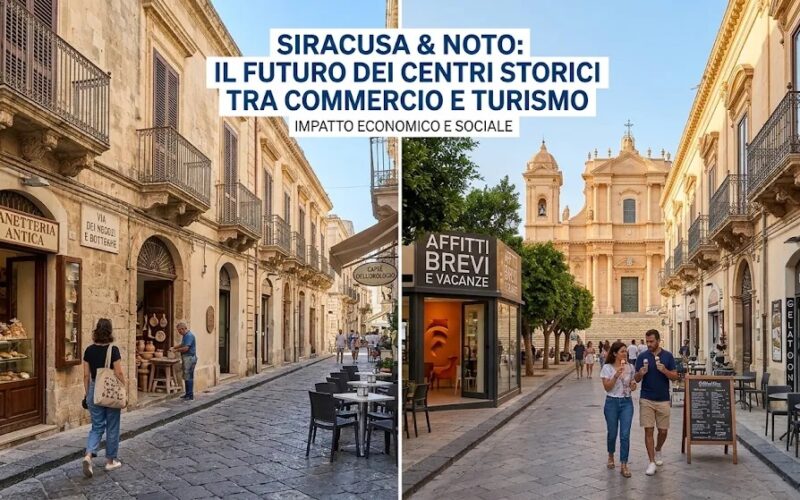
SYRACUSE / NOTO – The economic and urban transformation of the province of Syracuse fits into a broader evolution of the times affecting the main historic centres of Italy and Europe. From Ortigia to the baroque heart of Noto, the urban landscape is changing in step with new social habits among residents and visitors: traditional retail and historic artisan workshops are gradually giving way to growth in non-hotel accommodation (B&Bs and holiday homes) and a new offering of dining and services.
It is a natural transition process, linked to changing lifestyles and the digitisation of the market, which brings significant development opportunities alongside new adaptation challenges for the area.
Evolving urban fabric: new models of consumption and hospitality
The reorganisation of spaces and economic activities in the two centres that symbolise the province responds to the dynamics of a constantly changing market:
- Ortigia (Syracuse): The island is experiencing a natural shift towards an international vocation. The spread of short lets and the refurbishment of residential buildings meet a demand for flexible hospitality, in line with contemporary global tourism trends.
- Noto: In the baroque capital, along the axis of corso Vittorio Emanuele and in historic districts such as Mannarazza or Piano Alto, adapting the commercial offering to visitors’ needs has transformed old premises into wine bars, boutique resorts and food service outlets, redefining the economic dynamism of the centre.
Sector data: the pros and cons of an ongoing process
Cross-referencing reports from ISTAT, economic observatories of Confcommercio and Confesercenti, and surveys by the National Tourism Observatory makes it possible to outline the aspects of this major change.
The benefits of evolution (the pros)
- Property heritage refurbishment: The push towards hospitality and new services has encouraged substantial private investment, leading to the restoration of historic buildings and properties previously in a state of abandonment in both Ortigia and Noto.
- New jobs and economic vitality: Confcommercio data show how growth in the food & beverage sector and property management has created new job opportunities for young people and for the local service industry.
- Attractiveness and international reach: The central role gained by Syracuse’s historic centres in the global tourism circuit generates a constant inflow of tangible resources for the local economy.
The adaptation challenges (the cons)
- New housing and demographic structure: ISTAT surveys indicate a gradual relocation of long-standing residents to outer districts and areas, with a consequent adjustment of rental values to market trends.
- Reshaping of local retail: Confesercenti analyses highlight how historic neighbourhood shops are gradually giving way to dining and experiential formats, changing the type of services available in the immediate vicinity of the centre.
- Use of urban infrastructure: The increase in flows during peak season requires continuous updating of logistics management (ZTLs, parking, waste collection) to align the provision of public services with visitor peaks.
Towards a new territorial balance
The transformation under way in Syracuse and Noto is not an isolated phenomenon but a reflection of a change of era in the use of historic cities. Combining tourism development with the safeguarding of local identity represents the natural path by which communities and the business fabric are accompanying this transition, projecting the province’s baroque and maritime heritage towards the urban models of the future.