Translated automatically by AI from the Italian original.
On the orders of the Syracuse Public Prosecutor’s Office, the Ragusa Anti-Adulteration and Health Unit, supported during the execution phase by the territorial Carabinieri of the Syracuse and Ragusa provincial commands, carried out an order for precautionary measures and a simultaneous preventive seizure decree issued by the preliminary investigations judge of the Syracuse Court against seven people under investigation. They are suspected, in various capacities, of criminal association aimed at illegal slaughtering, fraud in animal traceability, trade in harmful food substances and illegal disposal of special waste.
The complex investigative activity, coordinated by the local Public Prosecutor’s Office, began with an initial crime report filed by the Pachino Carabinieri station and was later developed and deepened by the NAS personnel. The investigations, conducted with the aid of technological tools such as phone and environmental wiretaps and audio-video recordings, revealed a body of evidence indicating the existence of a structured criminal organisation. Within the group, a clear division of tasks and roles was identified, aimed at fuelling a parallel and illegal circuit for the supply, slaughter and sale of horse meat, in flagrant violation of current health and food safety regulations.
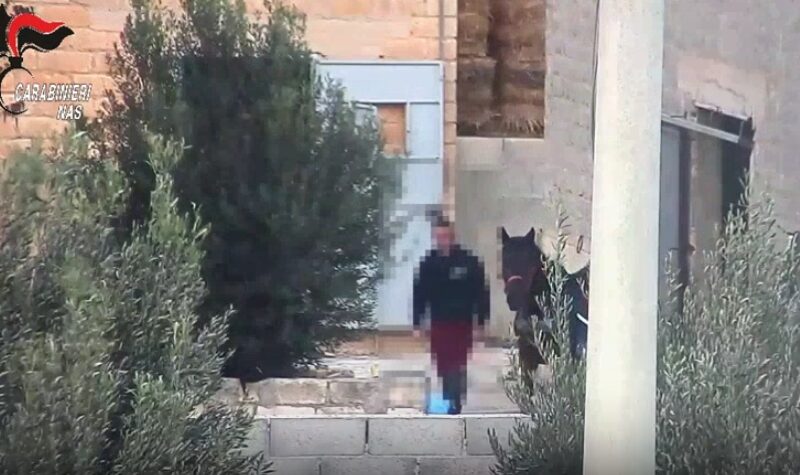
Specifically, the findings allowed investigators to reconstruct a well-established modus operandi based on the irregular procurement of horses formally registered as not intended for human consumption, sourced from clandestine commercial circuits and purchased at very low prices. The slaughter and subsequent butchering of the animals initially took place inside a rural farmhouse belonging to a local livestock company, a dilapidated structure lacking any health authorisation or basic hygiene standards. The meat products resulting from this illegal practice, potentially hazardous to public health, were then introduced into the retail sales chain and distributed at competitive prices to a butcher’s shop and various mobile sandwich vendors operating in several towns across the province of Syracuse.
To maximise illicit profits and avoid management costs, the waste and by-products from the slaughter were systematically abandoned and dumped uncontrolled on land adjacent to a major motorway in the province, creating dangerous illegal waste dumps of special waste, causing serious damage to the surrounding ecosystem. Further investigations also uncovered additional illegal activities carried out directly inside a slaughterhouse operating in the same province of Syracuse. These operations were covered up through the falsification and alteration of the accompanying documents for the horses, allegedly facilitated by the knowing involvement of the plant owners and an official veterinarian employed by the Syracuse provincial health authority (ASP).
Based on the solid evidence gathered by the specialist unit, the judiciary ordered house arrest for the aforementioned ASP veterinarian and the preventive seizure of several assets instrumental to the illegal activity within the Syracuse province, including a slaughterhouse, a stable, a butcher’s shop and an open area used as an illegal dump along the motorway, with a total estimated value of around €2 million.