Translated automatically by AI from the Italian original.
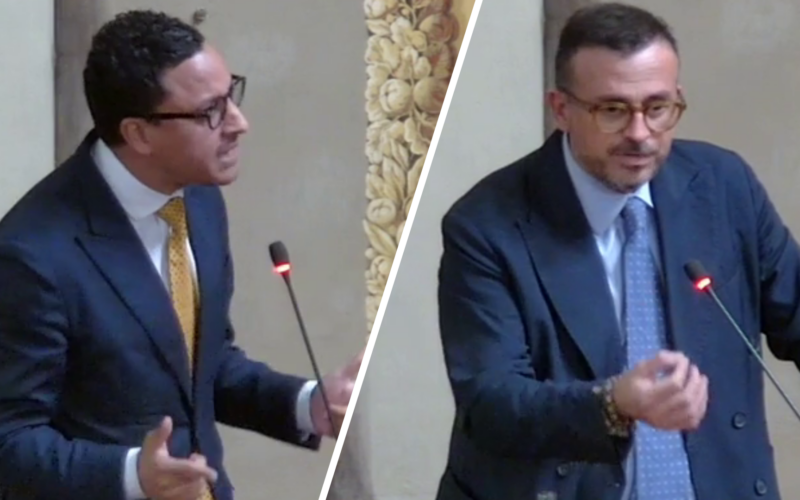
PALERMO – Tempers flared and voices were raised in the Hercules Hall during the latest session of the Sicilian Regional Assembly (ARS) dedicated to examining the corrective budget. The discussion on amendments saw fierce opposition over two crucial issues: the management of industrial wastewater treatment at the IAS plant in Priolo and the alleged “tailor-made” criteria for allocating funds to municipalities in High Environmental Crisis Risk Areas (AERCA).
IAS treatment plant and ATI Syracuse: the €6 million crux
The debate was sparked early on by the issue of connecting and ensuring the operational continuity of the IAS treatment plant (currently under judicial administration). A floor intervention highlighted the need to allocate €6 million to the ATI in Syracuse to guarantee the connection of the Porto Grande and the hinterland municipalities—including Syracuse, Melilli, Priolo and Solarino—without pre-treatment and safeguarding the future of the public facility before its release from seizure.
From the opposition benches came harsh criticism of the use of public funds earmarked for water ATIs, raising concerns about potential clientelism or new hires rather than prioritising structural investments and budget adjustments.
Article 90 and AERCA funds: “Ad hoc rules to favour individual municipalities”
The real uproar erupted during the examination of Article 90, a provision designed to disburse a €4 million contribution to municipalities in high-risk industrial pollution zones.
Several opposition MPs—including Tiziano Spada, Adriano Varrica, Michele Catanzaro and Stefano Zito—launched an attack, denouncing how the text, through a “normative patchwork”, narrowed the field of beneficiaries to just a few administrations close to the governing parties (including Melilli and Augusta), excluding other municipalities listed in the regional AERCA decrees in the provinces of Syracuse, Caltanissetta and Messina.
“It is not possible to make distinctions when talking about the health of citizens affected by pollution from petrochemical plants,” the opposition benches emphasised. “This article masks a favour, using the hydrogeological risk as an excuse, to benefit only those with refineries and who have started work this year, excluding places like Gela, Butera and other high-risk areas. Just write the names of the municipalities instead of taking Sicilians for a ride.”
The majority’s reply and the mayor of Melilli’s response
Defending the rationale behind the provision was MP and mayor of Melilli Giuseppe Carta, who firmly replied to the accusations:
“The funds must go primarily to those coastal municipalities that host refineries and chemical industries,” Carta responded. “These are areas that suffer direct environmental impact, issues related to wells and hydrogeological instability in residential areas, all at the expense of their own citizens. You cannot equate municipalities living next to plants with places that in the past were included in AERCA decrees only due to political proximity, without having a single industry on their territory.”
Vote and postponements
After the exchange of remarks and the rejection of corrective amendment 90.12 (defeated with 32 votes against and 23 in favour), the chamber called for the norm to be set aside and its overall scope to be reconsidered during the Stability Law, to avoid unequal treatment among Sicily’s local authorities.