Translated automatically by AI from the Italian original.
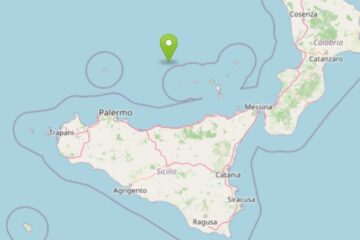
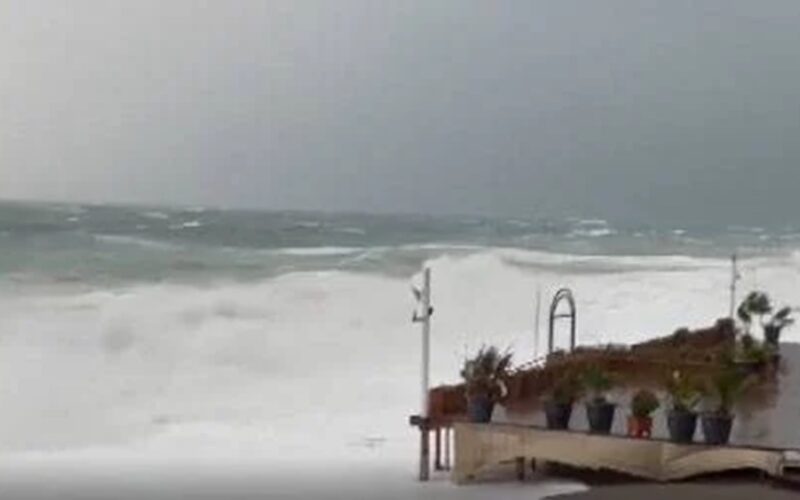
PALERMO – The strong earthquake of magnitude 5.5 recorded at 12:19pm in the southern Tyrrhenian Sea – preceded and followed by a prolonged sequence of seismic events north of the Aeolian Islands – temporarily triggered an orange-level tsunami alert (Advisory) in Sicily, which was later downgraded and revoked in the afternoon after checks and tide-gauge surveys conducted by the Civil Protection Department and the INGV.
An episode that brings the culture of prevention and the correct interpretation of bulletins issued by SiAM (the national tsunami early warning system for earthquake-generated tsunamis) back into focus. SiAM is an integrated structure involving collaboration between the INGV (Tsunami Alert Centre), ISPRA and the National Civil Protection Department.
What the “Advisory” (orange) level means
In the Civil Protection classification system, the orange level (Advisory) does not indicate the absence of danger. Instead, it identifies the possibility that the coast may be reached by a tsunami wave with a height of less than 0.5 metres and/or a run-up of less than 1 metre.
What is run-up?
The run-up does not measure the distance the water travels inland along the coast; rather, it is the maximum elevation reached by the wave on land relative to the average sea level.
As highlighted by the INGV Tsunami Alert Centre, even waves that appear minor can generate extremely strong currents and pose a serious risk to human life in shoreline areas and low-lying coastal zones. The orange level therefore requires the evacuation of exposed areas, albeit limited to a narrower coastal strip than the red alert (Watch).
How to behave on the coast: advice from “Io Non Rischio”
In the event of a tsunami alert or the presence of natural warning signs (a strong earthquake felt on the coast, a sudden and unusual retreat or rise in water levels, a deep roar from the sea), the institutional guidelines of the Io Non Rischio campaign recommend:
- Immediately leave the beach and shoreline: move towards higher ground on the coast or to the upper floors of sturdy buildings without stopping to observe the phenomenon.
- Use only pedestrian escape routes: do not use your car, as this could block evacuation routes and turn into a trap.
- Boats and ports: anyone in a port must abandon their boat and reach land, stopping at a high point; those already sailing offshore must stay away from the coast and monitor emergency radio channels.
- Do not return immediately: a tsunami manifests as a series of successive waves; the first wave is often not the largest, and several minutes can pass between peaks. You must wait for the official all-clear from Civil Protection.