Translated automatically by AI from the Italian original.
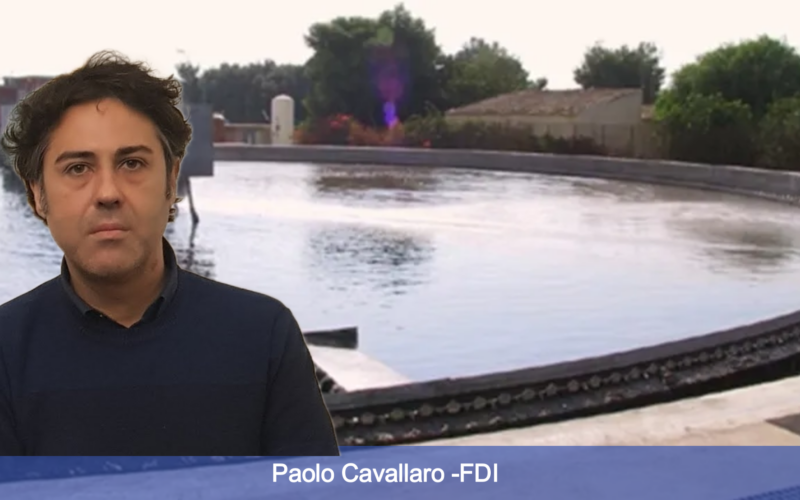
Concern is growing over the water supply crisis in Syracuse, where many residents report new outages, low pressure and disruption that have now lasted for days. Municipal councillor Paolo Cavallaro has highlighted the emergency and is calling for immediate action to assist households left without water and to provide users with timely information.
Cavallaro has criticised both Aretusacque’s handling of the service failures and the response from the municipal administration, particularly what he describes as a lack of adequate support measures and of a replacement service using tankers and Civil Protection.
“The water supply situation in Syracuse has now gone beyond any reasonable limit of tolerance,” Cavallaro said, stressing that repeated outages are compounded by the difficulties residents face in contacting the operator. The councillor reported that on social media many users complain of very long phone waits—sometimes nearly an hour—without receiving answers.
“The Municipality must immediately set up a dedicated emergency water hotline”
The first demand is directed at Syracuse Municipality: to set up a dedicated channel for reporting and dealing with emergencies related to the lack of water.
“If Aretusacque cannot guarantee an adequate phone service, the Municipality of Syracuse must step in. I am calling for an emergency water hotline to be activated immediately, so that residents’ reports can be collected, the most urgent situations identified and direct contact maintained with the operator,” Cavallaro said.
According to the councillor, particular attention must be paid to the elderly, people with disabilities and vulnerable families, who may suddenly find themselves without water even for the most basic daily needs.
“There are elderly people, people with disabilities and families who suddenly have no water, facing serious difficulties even with the most basic personal hygiene,” he pointed out. Added to this are the problems in areas where the pressure is so low that it compromises the normal use of household appliances.
Hence the call to provide a replacement service using tankers, to give priority assistance to vulnerable people and to keep a direct line open between the Municipality and the operator until the supply is fully restored.
Bills and compensation: “Citizens deserve answers”
Cavallaro also raised the issue of possible compensation for users in the event of outages or inadequate service.
“While all this is happening, bills continue to arrive regularly. It is therefore legitimate to ask what compensation users are entitled to when the service is interrupted or delivered for prolonged periods under inadequate conditions,” he said.
In Cavallaro’s view, it is unacceptable that citizens should have to pay regularly for the service and, at the same time, have to fend for themselves to find water, track down useful contacts and work out what safeguards they might be entitled to.
Attack on mayor Italia: “The city deserves to know what has been done”
In his remarks, Cavallaro directly challenged mayor Francesco Italia, criticising the lack of public messages of support for citizens and demanding clarification on any action taken against Aretusacque.
The councillor also recalled the political and administrative situation following the resignations of members of the municipal executive, stressing the responsibilities that, in his view, fall on the mayor, including those relating to Civil Protection and the water service, as well as his role as president of the water ATI.
“The silence of mayor Francesco Italia is striking. Faced with so many citizens in difficulty, we have not even heard a public word of solidarity from the first citizen,” Cavallaro argued.
He added: “We are not aware that he has publicly stated that he has intervened with Aretusacque to demand explanations for the causes of the repeated service failures, the actual timeframes for restoration and the measures to be adopted. If he has, let him tell the city and report what responses he has received. If he has not, he must act immediately.”
For Cavallaro, the political crisis at Palazzo Vermexio must not translate into a slowdown in administrative action just as the city faces an emergency involving an essential service.
“The political crisis at Palazzo Vermexio must not also turn into administrative paralysis. The city can wait for politics to sort out its own problems; those without water cannot wait,” he said.
Prefecture also involved
Cavallaro also announced that he would immediately involve the Prefecture, asking it to assess useful initiatives to ensure the institutional coordination needed to tackle the crisis.
The aim is to prompt a concrete and coordinated response, capable of supplementing technical work on the network with immediate measures to limit the disruption to families, especially in the worst-hit areas.
Aretusacque must clarify what changed after 25 June
Alongside the immediate emergency, the councillor raised a broader question about the management of the water network after the handover to Aretusacque on 25 June 2026.
Cavallaro acknowledged that the problems with the pipes are not new and that faults also occurred under the previous operator, SIAM. However, in his view, the frequency of service failures and the time needed to restore normal supply require precise explanations.
“Syracuse’s water network did not suddenly become old on 25 June 2026. The pipes were the same before the change of operator, and there were faults even under SIAM. But the frequency of the service failures we are seeing, and above all the time needed to return supply to normal, raise a question: why is this situation occurring with such intensity precisely after the change of operator?” he said.
The councillor therefore asked Aretusacque to clarify whether operational procedures, fault-finding methods, network manoeuvres or the systems used to deal with problems have changed.
“I am not jumping to conclusions without the technical data, but it is not enough to blame the age of the pipes every time. Aretusacque must explain to the city what has changed in the management of the network from 25 June to today,” he stressed.
A public timetable and a debate in the Municipal council
To move beyond an emergency management limited to individual repair work, Cavallaro also called for structural, transparent and verifiable planning. His requests include a map of the main network problems, details of work already carried out and planned, the definition of priorities and the publication of a timetable with the times and locations of interventions.