Translated automatically by AI from the Italian original.
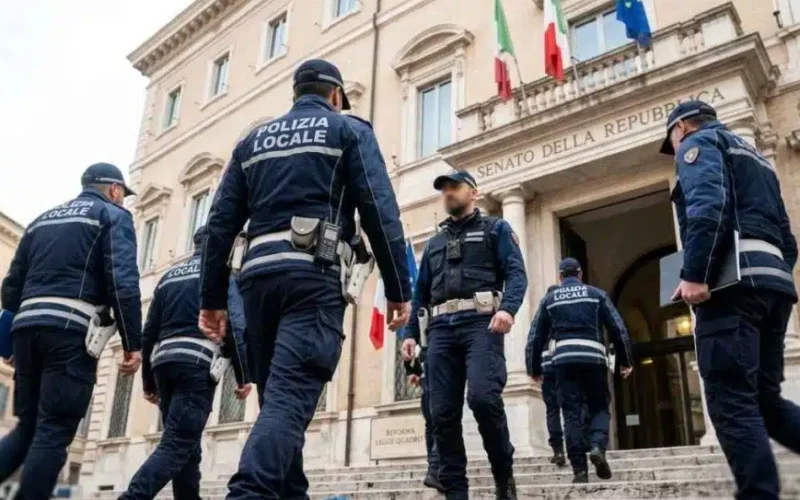
TERRASINI (PALERMO) – “There’s more beyond fines”: with this slogan, the 6th regional conference of Anvu Sicilia, the professional association of the Local Police, opened at Palazzo D’Aumale in Terrasini. The meeting, focused on regulatory updates and new technologies, turned into a heated discussion on the operational and institutional challenges faced by municipal officers following the approval of the sector reform.
Local officers strongly reject the old and limiting stereotype of the traffic warden solely engaged in “raising revenue” through fines, demanding recognition of a new identity as proximity police, which, however, often lacks protections, adequate training and operational tools.
Anvu’s complaint: “New duties but zero official training”
The president of Anvu Regione Sicilia, Giovanni Battista D’Amico, highlighted the stark gap between the responsibilities assigned to officers and the reality on the ground:
“The regulatory changes do not acknowledge the new realities that the municipal police must deal with: from the use of bodycams and artificial intelligence to carrying out evictions, from the use of tasers to managing critical situations in red zones. There is no official training on these innovations; this is where we as an association step in to fill this gap,” explained D’Amico.
Commander Colucciello’s alarm: “Effective on fines, but powerless in red zones”
Even more direct was the intervention of Angelo Colucciello, commander of the Palermo Municipal Police and former Carabinieri colonel, who emphasized the structural shortcomings of the force:
- No access to databases: “On administrative checks, we are and will always be effective, but when we are asked to intervene in red zones to maintain public order, we cannot act concretely because we lack direct access to the police database”.
- Reduced staff and advanced age: “In Palermo, we face a serious staff shortage and an average age of 56, factors that render the law meaningless. It is not enough to simply hire; we need to recruit and train suitable people,” Colucciello denounced.
Regional turning point: free extra-urban public transport on the way
A positive note for the category came from the speech of the regional minister for Infrastructure and Mobility, Alessandro Aricò, who announced an important step forward in protections for officers:
“We will end a disparity in treatment that has lasted for years through a specific law that will guarantee free extra-urban public transport for all local police. In the coming days, the bill will be officially approved,” assured regional minister Alessandro Aricò.