Translated automatically by AI from the Italian original.
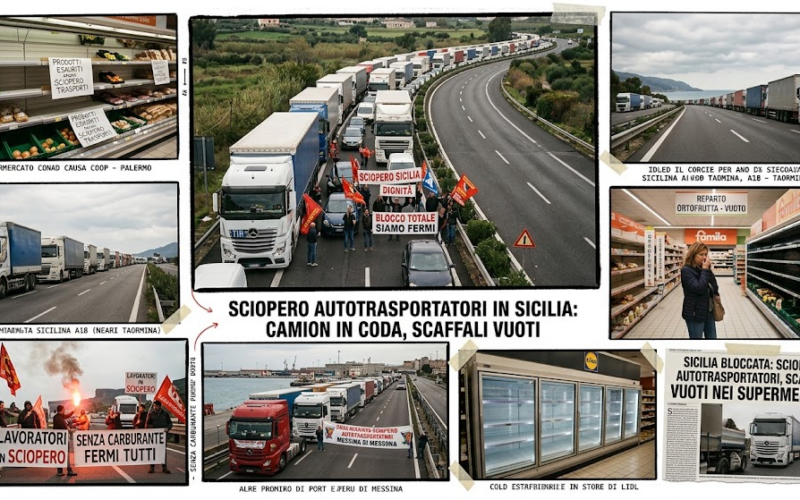
PALERMO – The truckers’ protest risks turning into a full-blown economic short circuit, paralyzing Sicily’s roads and logistics hubs. With an estimated 80% of drivers on strike for five days, growing alarm surrounds the supply of essential goods and fresh agri-food products to the island and other southern regions.
Empty shelves and agriculture hit hard: associations sound the alarm
The impact of the mobilization looks set to be especially severe for the island and other regions already disadvantaged by transport links:
- Federconsumatori Sicilia: Warns that the truck stoppage risks rapidly emptying supermarket and local shop shelves, with immediate shortages of perishable goods (fruit, vegetables and dairy).
- Confagricoltura: Reports the impossibility of shipping Sicilian agricultural produce to national and foreign markets. The prolonged blockade is causing goods to spoil in warehouses, hitting an already struggling supply chain and risking the loss of market share that will be hard to recover. The emergency is spreading like wildfire to Sardinia, Apulia and Calabria as well.
- The Sicilian paradox: Associations highlight the paradox of a region that hosts much of the country’s refining capacity yet pays a high price for energy costs.
Medicines and vaccines: Adf reassures the public
The picture is different and more reassuring on the public health front. The Associazione Distributori Farmaceutici (Adf) has moved to calm citizens about the flow of medicines:
“For now there is no cause for alarm; we continue to ensure regular supplies to pharmacies and citizens,” declared president Walter Farris, confirming that the widespread distribution of flu vaccines is also guaranteed, while calling for government intervention to ease the energy cost burden on distributors.
Reasons for the strike: soaring diesel prices and blocked Sea Modal Shift bonuses
At the root of the strike is the unsustainable surge in diesel prices and, specifically for Sicily, the delay in payments for the “Sea Modal Shift”, a key incentive for sea-road intermodal transport.
- Federconsumatori: Expresses solidarity with the workers, denouncing price speculation at the pump and calling for a reduction in VAT, reform of excise duties and stricter controls.
- Assotir: General secretary Claudio Donati, while understanding the drivers’ exasperation, warns against autonomous stoppages, describing them as “counterproductive” if they do not address the sector’s structural issues: starvation rates imposed by intermediaries, payment delays and exhausting waits at unloading points.
Political debate: Schlein calls for a “dynamic cap” on fuel prices
National politics has also weighed in decisively. The secretary of the Partito Democratico, Elly Schlein, has urged the government to immediately open a roundtable with the protesting groups:
“Instead of turning on those who protest because they can no longer make ends meet, we need exceptional public intervention,” Schlein stated, proposing the introduction by law of a 90-day dynamic cap on fuel prices to give families and businesses some initial relief.