Translated automatically by AI from the Italian original.
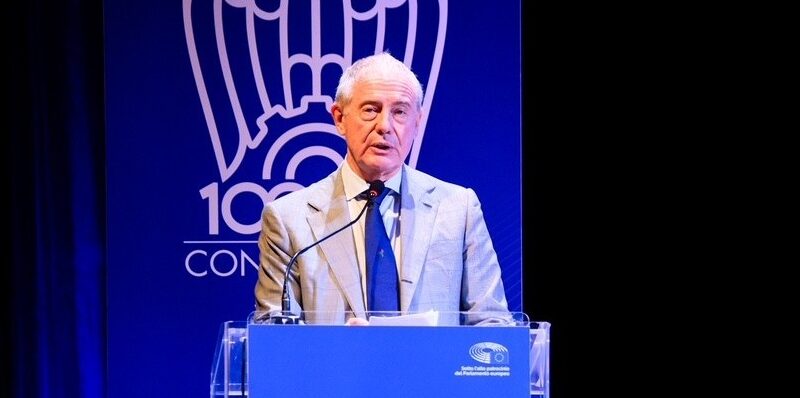
A century of industrial history looking to the future of energy transition and regional development. Confindustria Siracusa today celebrated its centenary with a public assembly in the prestigious setting of the Teatro Massimo in Ortigia, attended by the Minister for Business and Made in Italy, Adolfo Urso, and the President of the Sicilian Region, Renato Schifani. On stage were also the President of Confindustria Sicilia, Diego Bivona, the deputy mayor of Syracuse, Edy Bandiera and the President of the Free association of municipalities Michelangelo Giansiracusa (the former province).
The assembly, which received the High Patronage of the European Parliament, opened with a video message from the President of Confindustria, Emanuele Orsini, and a message from the President of the European Parliament, Roberta Metsola.
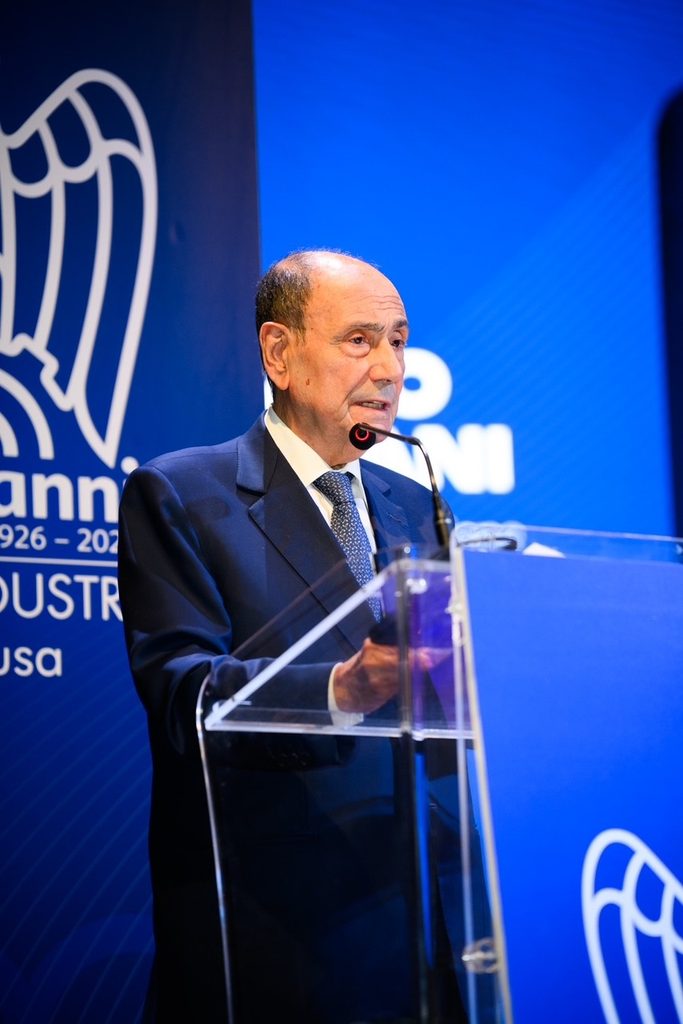
The Minister for Business and Made in Italy, Adolfo Urso, stressed the strategic importance of the area and the growth of the industrial sector. “Syracuse is Europe’s second energy hub,” Urso said. “It refines 30 per cent of the national demand and employs 124,000 people, 13,000 more than in 2022. Above all, this major industrial hub has identified the path to growth by tackling the green transition, which is essential for our country’s energy security.”
The President of the Sicilian Region, Renato Schifani, recalled that, according to the Ambrosetti report, the refineries in the Syracuse hub account for about 30 per cent of the national crude oil processing capacity. “These figures,” Schifani added, “explain why the future of this area concerns the whole country. Over a century, production, technology and market sizes have changed. What has remained is the responsibility of those who, every day, open a business and know that their decisions also affect the lives of other families. The regional government is grateful to these people and to the workers who, together with them, have built Syracuse’s industrial history.”
The President of Confindustria Sicilia, Diego Bivona, invited attendees to consider the legacy of these 100 years. “For Confindustria Siracusa, this is above all a method and an important model of sound businesses that always operate within the law.”
The President of Confindustria Siracusa, Gian Piero Reale, then retraced the most significant milestones of these 100 years in his report. “We have an important history behind us that must help us look to the future,” Reale said. “It is essential for companies to work together and with the region. On the occasion of these 100 years, we ask, in order to compete, for clear, stable rules and a strong strategic alliance between the state, the region, the area and the productive sector.” Reale emphasised that small and medium-sized enterprises, as well as operating in the industrial supply chain, authoritatively lead the sectors of excellence in agri-food, construction, the maritime economy, transport, healthcare, services and high-end cultural tourism. “When big industry invests and small and medium-sized businesses innovate, the entire provincial area reaches the top of regional and Mediterranean competitiveness.”
Reale then presented the Centennial Volume, dedicated to the association’s journey and the relationship between business and the region, and launched the portal of the Historical Archive of the Industrial Hub (www.archivioindustriasiracusa.it), which will make the knowledge heritage linked to Syracuse’s industrial history accessible.
The deputy mayor of Syracuse, Edy Bandiera, and the President of the Free association of municipalities, Michelangelo Giansiracusa, recalled Confindustria’s fundamental role in the region’s development.
The Centenary Assembly was coordinated by Lelia Crispino, President of the Young Entrepreneurs of Confindustria Siracusa, and Edoardo La Ferla, President of the Young Entrepreneurs of Confindustria Sicilia.
The proceedings continued with two panels moderated by the journalist Nino Amadore of Il Sole 24 Ore. The first, “The future of industry between transition, high energy and fuel costs”, addressed energy costs, supply security, decarbonisation, the evolution of technologies and fuels, and the prospects of the industrial hub. Speakers included Alessandro Viviani (TEHA – The European House Ambrosetti), Marcello Poidomani (President of Versalis and coordinator of Eni’s industrial transformation), Rosario Pistorio (CEO of Sonatrach Raffineria Italiana), Guglielmo Allibrio (CEO of Sasol Italy), Paolo Fedeli (CEO of ISAB), Edouard Neyrand (CEO of Air Liquide Italia), Giancarlo Bellina (CEO of B2G Sicily) and Emanuele Di Stefano (Industrial Activities Director of Buzzi Unicem).
Artificial intelligence, digitalisation and attracting new talent were the focus of the second panel, “SMEs, startups and new skills for the future of the region”. On the stage of the Teatro Massimo were Luigi Alini, Professor of Technological and Environmental Design in Architecture at the University of Catania, Paolo Scollo, Rector of the Kore University of Enna, and Andrea Corso, President of the ITS Archimede of Syracuse. The five companies associated with Confindustria Siracusa, Datanetwork, IREM, SerTecAv, The Academy and Xifonia, presented concrete experiences of innovation and skills development.