Translated automatically by AI from the Italian original.
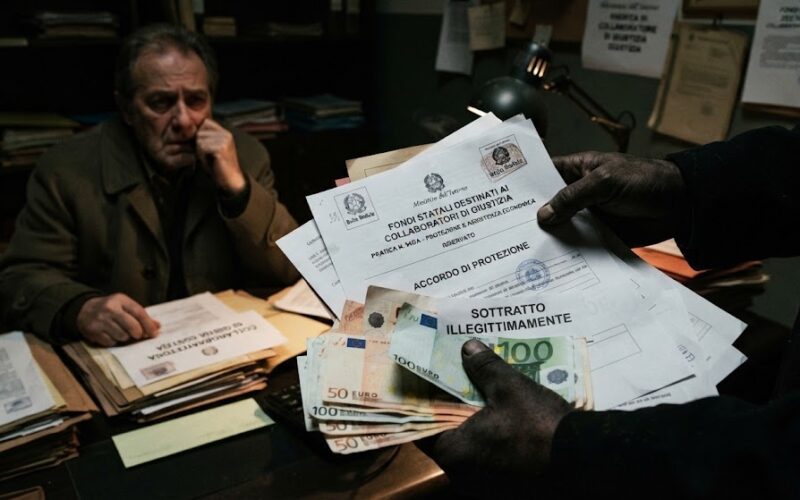
ROME / PALERMO – A move that risks leaving justice collaborators and their families destitute, exposing them to grave personal safety risks. Raising the alarm, in an interview with La Stampa, is lawyer Luigi Li Gotti, the long-standing defence counsel for famous informants such as Tommaso Buscetta, Totuccio Contorno and Giovanni Brusca. At the heart of the controversy is the possibility that the state may recover the collaborators’ tax debts by dipping into the sums earmarked for their “capitalisation” – the final financial contribution intended for social reintegration at the end of the protection programme.
The complaint: “Law ignored for decades and families betrayed”
According to lawyer Li Gotti, the measure appears as a stunning novelty that risks upsetting delicate balances built up over the years:
“This business of recouping tax debts cannot suddenly emerge by rediscovering a law that had been ignored for decades. When a justice collaborator signs up to the protection programme, they know that at the end the state will provide money for so-called life projects. The new development is that this money is now tied to the purchase of a property, something concrete.”
The real critical issue concerns the day-to-day survival of family units once they leave the protected system. Depriving informants of the capitalisation fund to pay off debts to the Revenue Agency means condemning them to destitution: “But if you take away the capitalisation fund because it is needed to repay the debt to the Revenue Agency, what do they eat the next day?” the lawyer asks. “These are poor people, excluded from networks, who at 60 or 70 cannot find work. I have a client, a justice collaborator, who is 75. The state has greatly benefited from his contribution. And now what? Throw him out on the street? In the meantime all he will have left is to go and eat at Caritas.”
Security risk: returning to old areas and the danger of retaliation
Beyond the social and economic drama, the issue opens an alarming scenario on the front of security and public order. Many collaborators, finding themselves without resources and unable to support themselves independently outside the protected circuit, may decide to return to their places of origin:
“One of my clients told me: we are going back down there, at least we still have some contacts,” Li Gotti explains. “Moreover, after 20 years the very people they helped to arrest and convict are also back in circulation. They risk meeting them in the street. Imagine what the outcome would be.” A short circuit that refocuses attention on the fragility of the post-protection phase and the need for rigorous safeguards for those who have chosen to break with the mafia clans.