Translated automatically by AI from the Italian original.
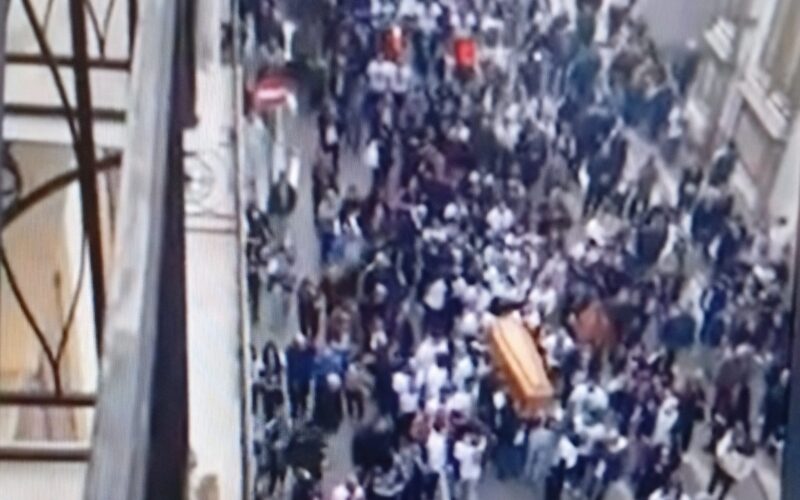
A funeral procession turned into a public display, with roaring scooters, firecrackers, fireworks and shutters pulled down. This is what happened on Monday 9 November in the heart of Palermo’s historic centre during the funeral of Emanuele Rubino, 36, who was convicted of attempted murder and extortion with mafia-style methods. The episode has sparked outrage and reignited the debate over the presence and influence of organised crime in the city’s historic districts.
The coffin travelled along via Maqueda, one of the Sicilian capital’s main pedestrian thoroughfares, accompanied by a procession of about a hundred people. Leading the cortege were several mopeds, some ridden by people without helmets, while firecrackers and fireworks were set off along the route. The procession reached the historic Ballarò market, where many traders had lowered their shutters for the funeral.
The scene shocked residents and tourists, some of whom found themselves faced with a display that took on the appearance of a public spectacle. Images shared on social media quickly went viral, turning the incident into a national talking point.
Rubino had been sentenced to 12 years for the 2016 attempted murder of Yusupha Susso, a young Gambian man whom he shot in the head, and had also been involved in extortion cases targeting foreign traders in the Ballarò area. He was under house arrest for health reasons.
Antonello Cracolici, chair of the Sicilian Regional Anti-Mafia Commission, has spoken out strongly, calling for full clarity on how the procession was allowed to take place and on who was responsible for maintaining public order.
“What happened yesterday with the spectacle funeral through the streets of Palermo’s historic centre is devastating and calls on everyone to show greater responsibility and vigilance. I wonder how it was possible to allow that funeral procession without anyone intercepting and stopping it from the very beginning.”
Cracolici also criticised the lack of preventive action: “I believe the ecclesiastical authorities and the police seriously underestimated the situation. It must be made clear what happened and what must never happen again.” For the regional Anti-Mafia chair, what took place cannot be dismissed as a simple show of mourning but demands reflection on the ability of institutions to prevent episodes that risk sending messages of strength and territorial control.
The mayor of Palermo, Roberto Lagalla, has also commented, calling it unacceptable to turn mourning into a display capable of disrupting the peace of residents and traders. The mayor explained that the Municipal Police, present at Quattro Canti, had reported the procession and intervened to stop it from continuing along that route, thus avoiding further critical situations. The Archbishop of Palermo has also called for reflection, stressing that the closure of an entire market for the funeral of someone convicted of serious crimes cannot leave people indifferent.