Translated automatically by AI from the Italian original.
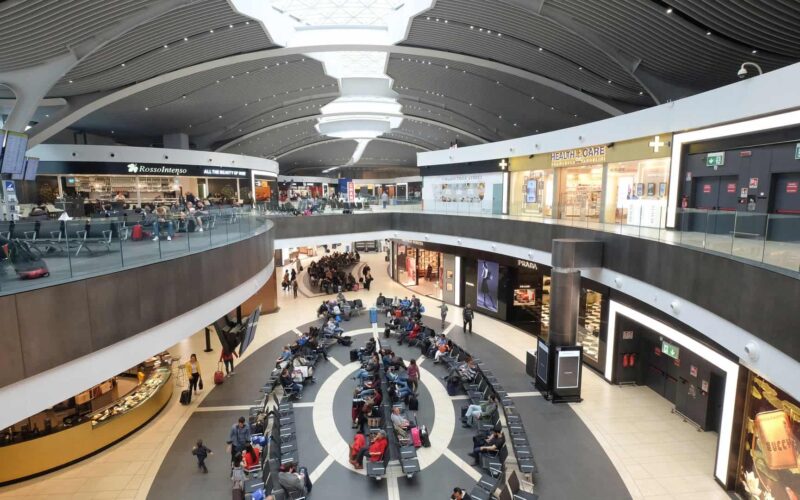
ROME – A hate-filled, misogynistic email threatening a massacre at high altitude triggered a major security emergency in Europe’s skies, primarily affecting Italy’s main hubs at Rome Fiumicino and Milan Malpensa. Fortunately, no explosive devices were found after thorough sweeps and cross-checks, but the wave of fake bomb threats caused emergency diversions, fighter jet escorts and long waits for hundreds of passengers.
The hate mail and the ultra-nationalist claim
“The explosion will happen in 60 minutes. Today your sky will be red … Your feminist regime will remember this forever.”
This was the message sent this morning to Aeroporti di Roma and several airport management companies. It was signed by the “Fighters of the Male State”, a group linked to the Russian ultra-nationalist and misogynistic movement Muzhskoye Gosudarstvo, founded by Vladislav Pozdnyakov and already outlawed by the Russian authorities. The email accused institutions of being part of a “criminal conspiracy”, listing a number of flights and urging evacuations.
Fiumicino and Malpensa: fighter jets in the air and diversions to France
The impact on routes to the capital and Lombardy was immediate and varied:
- Finnair flight (Helsinki–Fiumicino): It was flanked and intercepted by Italian Air Force fighter jets, then escorted to land at Fiumicino to allow bomb disposal experts to carry out checks.
- Aer Lingus flight EI402 (Dublin–Rome): The Airbus A320 diverted its route and made an emergency landing at the French military base at Évreux in Normandy.
- Malpensa and east-European routes: The message triggered security protocols at the airport named after Silvio Berlusconi. A Wizz Air flight to Warsaw was diverted to Vienna, while a plane bound for Bucharest was inspected on arrival.
- Ryanair case (Pescara–Charleroi): An alert procedure was activated in the afternoon after the word “bomb” was found written in the on-board toilets. Passengers were disembarked in Belgium and checked with sniffer dogs.
European routes in chaos: from Madrid to Prague
The wave of fake alerts saw similar incidents across half of Europe. At Madrid Barajas, Tedax bomb disposal experts from the Guardia Civil combed through four aircraft and ruled out any danger, while further reports affected flights to Bulgaria, Austria, Belgium and the Czech Republic.
The investigation and Defence Minister Crosetto’s words
The Polaria, together with the postal police, is investigating the origins of the cyber threats. Speaking on the sidelines of Prime Minister’s Questions at the Senate, Defence Minister Guido Crosetto framed the incident within the new geopolitical conflict scenarios:
“It is called ‘warfare below the threshold’ because it is below the threshold of attribution. It is done deliberately in this way so that no one can prove with certainty who is behind it. These are attacks that are part of a deliberate strategy to increase chaos, trigger anxiety and create panic in our countries. It is a new threat we will have to get used to.”