Translated automatically by AI from the Italian original.
PALERMO / NEWS – A funeral procession for Emanuele Rubino, 36, held in recent days through the alleys of the historic Ballarò market and the pedestrian island of via Maqueda as far as the Carmine church has sparked debate in Palermo among the public and institutions alike. Social media images showing about a hundred participants, the procession led by roaring scooters and fireworks exploding as the coffin passed, had drawn strong criticism from the mayor, the political world and the Archbishop of Palermo.
Now speaking in response to media accounts is his elder brother, Giuseppe Rubino, 54, who says he is embittered and disappointed by the uproar over the funeral.
Giuseppe Rubino: “He made mistakes and he was paying for them; there was no challenge to the state”
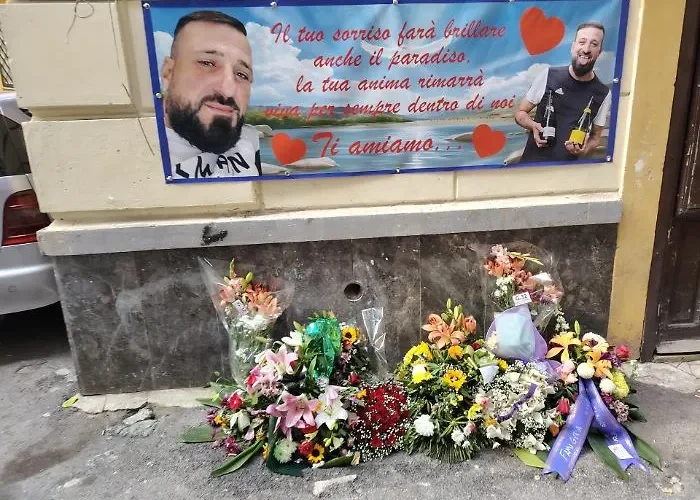
Speaking beneath the balcony of the family home, in the Ballarò alley that opens onto via Maqueda where a banner bearing the 36-year-old’s face is displayed, Giuseppe Rubino firmly rejects the mafia label pinned on his brother and any suggestion that local shopkeepers were intimidated:
“My brother was no mafioso and no boss. In his life he made mistakes and he was paying for them. We did not force anyone to lower their shutters or close their business. It is the custom in this district that when someone dies, their coffin is carried through the places they loved. If shopkeepers want to, they close their premises as the coffin passes as a sign of mourning. What challenge to the state? In the procession, wearing T-shirts with Emanuele’s face, there were also shopkeepers from Bangladesh.”
The 36-year-old’s criminal record and the family’s history in the district
The Rubino family have lived in the Albergheria district for about a century, where their grandfather Santo founded the area’s first funeral business. Emanuele, the youngest of seven brothers, had a heavy criminal record: he had been sentenced at first instance to 12 years in prison for the attempted murder of a Gambian citizen shot in the head in 2016, as well as a 9½-year sentence for extorting foreign shopkeepers. After spending 13 years in prison, for the past six months he had been under house arrest for health reasons.
The voice of Ballarò’s shopkeepers: “This is how we say goodbye to all the district’s children”
Several traders from the old food market have rallied around Giuseppe Rubino, determined to defend the image of a district they say is too often portrayed solely through the lens of crime and subjugation. As proof of the everyday integrity of the local business community, they cite an incident in via Giovanni Grasso when a restaurateur returned a lost wallet to a tourist from Brescia containing €600 in cash, documents and credit cards.
As for the funeral, the shopkeepers claim a communal rite reserved for every resident of the district:
“When Giuseppe La Barbera, also from Ballarò, a water-company worker who died with four colleagues in the Casteldaccia massacre, had his funeral, his coffin was also carried through the district and the shopkeepers closed their businesses for the funeral. The mayor was there too. We do this for every child of Ballarò,” says a fruit seller at the market.