Translated automatically by AI from the Italian original.
How Google’s system works
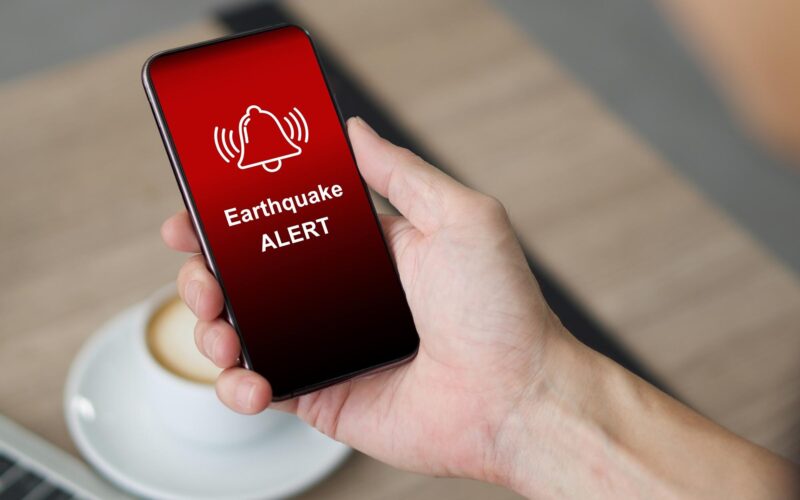
Google’s earthquake alert system is now operational across Italy, turning Android smartphones into a dense network of seismographs capable of warning citizens with precious seconds to spare before tremors arrive.
After long appearing as an inactive menu option on devices, the feature has been automatically enabled on almost all compatible phones, with no need to install external apps or register. To ensure the service is ready to use, simply check that the “Earthquake alerts” option is activated in the phone’s settings (usually under “Safety and emergency”) and keep a Wi-Fi or mobile data connection active.
How smartphones detect tremors early
The technology relies on the accelerometers already built into devices. During an earthquake, P-waves (fast but less destructive) arrive first, followed by S-waves (slower but far more damaging).
When multiple stationary phones in the same area simultaneously detect a vibration consistent with P-waves, they send an anonymous signal to Google’s servers. The algorithm instantly calculates the epicentre and magnitude, issuing a warning before the S-waves arrive. According to Boone Spooner, Android’s security chief, the lead time ranges from a few seconds up to 10–15 seconds, extending to one or two minutes for those farther from the epicentre.
Based on the estimated magnitude, the screen displays three alert levels:
- Be aware: a simple notification for minor nearby tremors.
- Be ready: a more detailed alert for stronger tremors, urging users to prepare.
- Take action: a full-screen message for moderate to strong quakes, with immediate practical instructions on how to protect yourself.
Global reliability and support for the INGV network
Already active in over 200 countries with more than a billion notifications sent, the system has proven effective in critical contexts: a study published in Science in 2025 found that in Turkey the network detects an average of 312 quakes per month, managing to warn over 16 million people in just over five seconds during the magnitude-6.2 Marmara Ereğlisi earthquake, as well as giving residents of Caracas in Venezuela about 30 seconds’ notice.
The system does have an inherent limitation: speed depends on the presence of smartphones near the epicentre, making it less effective over open sea or in uninhabited areas. For this reason, the Android network does not replace but complements scientific infrastructure such as the National Seismic Network of the INGV (operational 24/7 with around 500 stations). In a high-seismic-risk country like Italy—where earthquakes over the past 60 years have caused about 5,100 deaths and €240 billion in damage—this technology provides an additional, valuable tool for widespread prevention.