Translated automatically by AI from the Italian original.
CALTANISSETTA / IN-DEPTH – The suicide of Gianni De Gennaro, 78, found dead at his country estate in the Maremma, marks one of the most dramatic moments in the recent history of Italy’s republican institutions. This is not only because of the man’s profile – for decades at the top of the National Police (Polizia di Stato), the Department of Security Information (Dis) and a symbolic figure of the anti-mafia era alongside Giovanni Falcone – but because of the judicial and personal context in which the act occurred: his entry in the register of those under investigation by the Caltanissetta Public Prosecutor’s Office in the inquiry into the cover-up following the via D’Amelio massacre.
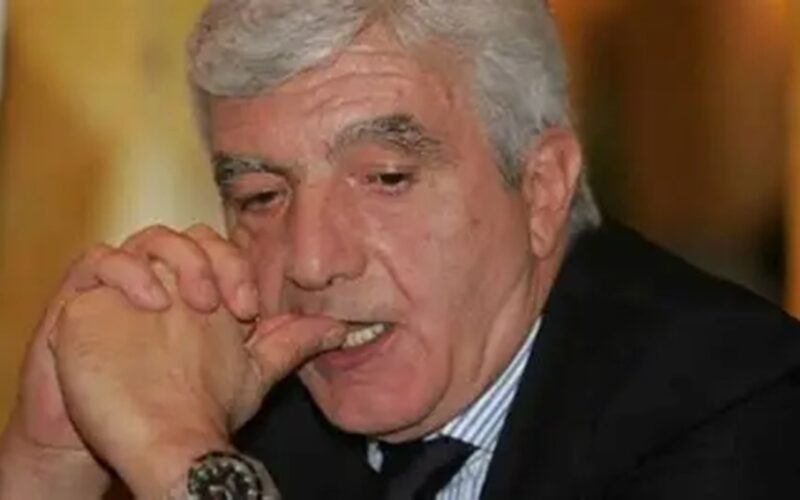
[Image: Former police chief Gianni De Gennaro]
The weight of the files: 3,012 mentions in 700 pages and the judge’s “no”
In recent weeks the former top officer’s schedule had been entirely taken up with studying a massive file: almost 700 pages requesting house arrest, accompanied by more than 1,000 pages of wiretaps and investigative documents. In this file his name appeared exactly 3,012 times.
Yet on a strictly procedural level, the case built by the Public Prosecutor’s Office led by Salvatore De Luca had already hit a first, clear obstacle. In a 100-page order, the preliminary investigations judge of Caltanissetta had rejected the request for a precautionary measure, ruling out sufficient evidence for the cover-up allegations relating to the 1992 massacres or the removal of Paolo Borsellino’s red diary. The judge had instead traced the concerns recorded in the wiretaps back to the handling of events dating to the late 1980s, finding no grounds to restrict the personal freedom of the former prefect.
The red thread: from Salvatore Contorno’s return to the red diary
To understand the scope of the Caltanissetta inquiry, the tape must be rewound to 1989 and the controversial return to Sicily of the former state’s witness Salvatore Contorno, arrested in a hideout in San Nicola l’Arena under circumstances that at the time fuelled the season of poison-pen letters and anonymous notes by the so-called “Corvo di Palermo” [Palermo Raven].
According to the reconstruction by the Caltanissetta prosecutors, between that episode and the subsequent cover-ups following the Capaci and via D’Amelio massacres there was a “red thread” with two tracks:
- The declarative front: the prosecution hypothesised that De Gennaro, together with his long-standing collaborators Francesco Pacetto and Massimo Carnicelli, had monitored and pressured Contorno to prevent him from telling the Caltanissetta magistrates details about an alleged “opaque management” of his return to Sicily, fearing that such statements could reopen old wounds in the investigative history of those years.
- The documentary front: the second pillar concerned the alleged removal, concealment and destruction of notes and computer files – conduct also contested against Carnicelli and the Dis official Donatella Peruzzi – after the searches carried out in September 2023 on the relatives of the former head of the Palermo Flying Squad, Arnaldo La Barbera, already at the centre of investigations into the cover-up linked to the false pentito Vincenzo Scarantino and the disappearance of the red diary.
The media pillory and the 1 December hearing at the Court of Review
Beyond the judges’ technical assessments, what probably weighed unbearably on the mind of the former police chief was the rift between a lifetime spent on the front line in the fight against Cosa Nostra – from investigations into the mafia’s international connections to the capture of major fugitives – and the infamous accusation of having tampered with evidence in the massacre that took Paolo Borsellino’s life. On Friday afternoon, after a long meeting in Rome with his lawyer, Professor Franco Coppi, De Gennaro had gone to his estate in the Grosseto countryside, taking with him the very copies of the documents he was to discuss before the judges.
With his death the case against him is extinguished, but the judicial front remains open for the other four under investigation in the Caltanissetta inquiry – Salvatore Contorno, Donatella Peruzzi, Massimo Carnicelli and Francesco Pacetto – for whom the hearing before the Caltanissetta Court of Review on the appeal filed by the Public Prosecutor’s Office is still set for 1 December. On the institutional and civic level, the unresolved issue remains of balancing the legitimate pursuit of historical and judicial truth with the devastating impact of proceedings that, before even reaching a courtroom, risk utterly destroying people’s dignity.