Translated automatically by AI from the Italian original.
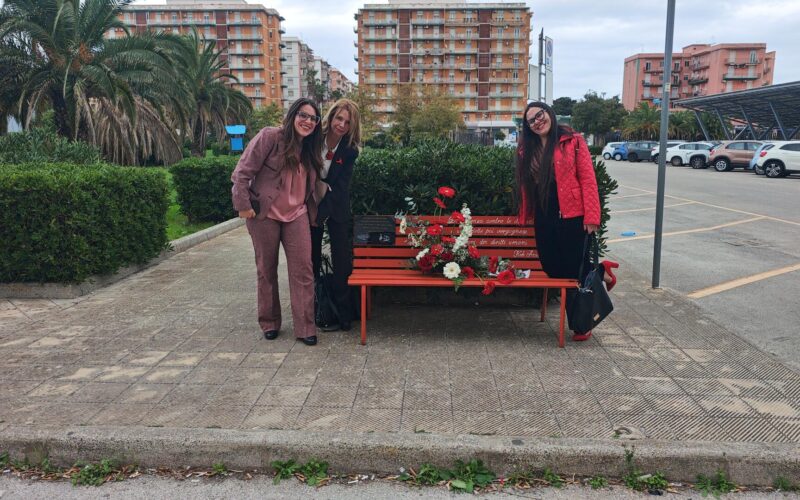
SYRACUSE, FLORIDIA / NEWS & SOCIETY – The Court of Assize room at the Palace of Justice in Syracuse hosted this morning, Wednesday 25 November, a round-table awareness event “Beyond that red… the strength to be reborn”, promoted by the Single Guarantee Committee of the Court of Syracuse and the Equal Opportunities Committee of the Bar Association on the International Day for the Elimination of Violence against Women. The meeting was attended by judicial and administrative authorities, law enforcement, representatives of the school world and anti-violence centres in the area.
The contribution of “Work in Progress – Pink House” and teamwork
The contribution of the APS Work in Progress – Pink House Anti-violence Centre of Floridia, prepared by president Cristina Sanzaro, was presented and moderated by lawyer Mimma Coco on the theme “No woman on the margins: tackling violence and discrimination to guarantee protection, support, freedom and dignity for all”.
Alongside lawyer Coco, the initiative was joined by lawyers Elena Procopio and Aglaia Reale, cultural mediator Floriana Sanzaro, member Pinella Miano, volunteers Tania Vasile and Giorgia Conigliaro and Giusy Devole, bearing witness to the importance of a multidisciplinary approach and teamwork in the area.
Cultural prevention, the role of schools and the most vulnerable women
During the intervention it was reiterated that violence against women is not a private matter nor an issue that concerns only the female world, but a cultural and social phenomenon that also calls on men to overcome models based on possession and subordination, acting at the roots before the emergency even arises.
A decisive role falls to schools, which must educate in respect and equality from childhood: in this regard the association recalled the training programmes already launched in schools, including the recently concluded activities with the 4th Comprehensive Institute “Salvatore Quasimodo” of Floridia to deconstruct gender stereotypes, including those linked to professional roles.
Particular attention was finally paid to women exposed to greater vulnerability—migrants, members of cultural minorities or lacking economic independence—who risk invisibility due to language barriers, isolation and economic dependence. To overcome these obstacles, accessible information, cultural mediation, prejudice-free listening and concrete paths to independence are needed: “Freedom, dignity and respect are not privileges to be granted: they are rights we must guarantee to all,” was the concluding summary of the intervention.