Translated automatically by AI from the Italian original.
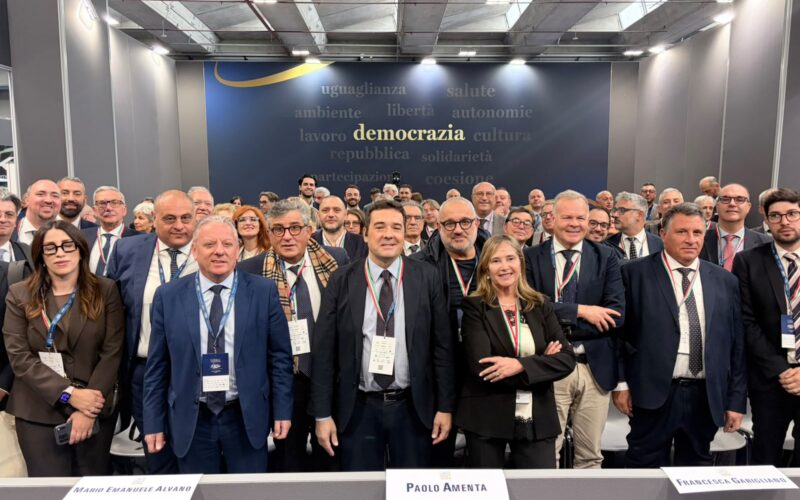
Reviewing the resources obtained from the Region and relaunching the push for fairer national transfers. There was strong participation from Sicilian mayors, led by president Paolo Amenta and the secretary general of the association of Italian municipalities (ANCI) Sicily, Mario Emanuele Alvano, this morning at Veronafiere for the opening of the 43rd national ANCI assembly. In the presence of the regional minister for local government Francesca Garigliano, the leaders of the Sicilian municipalities’ association claimed the increase in the Local Government Fund—which aims for €400 million annually for 2027–2029—while calling for new allocation criteria to overcome inequalities between municipalities.
The three-day national event, titled “Dear Italy. Mayors for the 80th anniversary of our Republic”, brings together mayors and local administrators from across Italy, along with representatives of the country’s main institutions, to discuss the challenges facing municipalities and the future of local government.
The meeting was an important opportunity to review the initiatives promoted by ANCI Sicily at national and regional level to protect local government and to discuss further actions to be taken. Central to the debate were the significant results achieved in securing regional resources for municipalities, thanks to the work of the Sicilian municipalities’ association and productive dialogue with the regional government. “A process that has allowed the Local Government Fund to rise from the initial €350 million to the current €385 million, and which now sees the regional stability law proposal providing for €400 million annually for the 2027–2029 three-year period, as well as an increase in the Investment Fund from €115 million to €120 million,” Amenta and Alvano said. “A historic result, considering that for about ten years the Local Government Fund had not seen significant increases.”
Particular attention was also paid to the need to revise the current allocation criteria for resources. On this, ANCI Sicily has put forward proposals aimed at overcoming mechanisms that risk exacerbating disparities between municipalities, even within the same demographic bracket, and at ensuring a fairer and more equitable distribution.
At the national level, the discussion also covered the appeal brought by ANCI Sicily against the current allocation criteria for the Municipal Solidarity Fund, which continue to penalise Sicilian municipalities, and the further initiatives to be developed to ensure a fairer distribution of resources.
“The results achieved show how important strong and united representation of Sicilian municipalities is. After years of substantial stagnation in regional resources, we have secured significant increases, the fruit of constant work and institutional dialogue that we intend to continue,” Amenta and Alvano emphasised. “We must now consolidate these results and tackle the outstanding issues, starting with the allocation criteria and the need to ensure all municipalities have adequate resources to provide services to citizens.”
The presence of Sicilian mayors at the main national assembly of Italian municipalities thus represented not only a moment to discuss the results achieved, but also an opportunity to reaffirm the role of Sicilian local authorities in the national debate on autonomy, resources and the quality of services for citizens.