Translated automatically by AI from the Italian original.
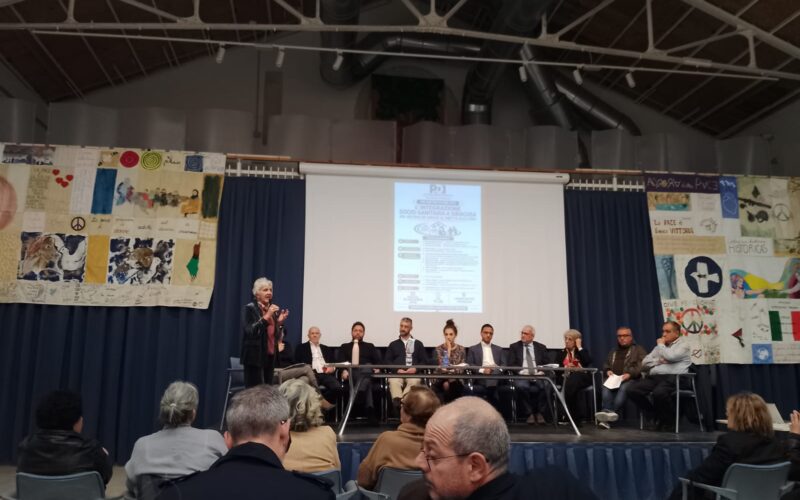
PALERMO / ECONOMY & BUSINESS – The Sicilian economy is growing faster than the national average and, driven by Italy’s EU-funded recovery plan (PNRR) and faster payments from the public administration, is creating the conditions to strengthen the relationship between small businesses and the banking system. This was the picture that emerged in Palermo, at the headquarters of Sicindustria, during the meeting “How to tackle the challenges and finance businesses” promoted by Centro Studi Societari and Credialis, with around 70 representatives from institutions, banks, accountants and entrepreneurs.
The discussion aims to overcome a clear challenge in the data: in the first six months of the year, lending to productive activities in Sicily grew overall by 4.5%, but while credit to large companies rose by 7%, lending to small businesses fell by 2%. In addition, there are 20,000 businesses spread across more than 150 Sicilian municipalities without bank branches, along with the imminent entry into force in January of the even stricter criteria of Basel 3.
Cultural change, creditworthiness and “clean-up” of old companies
According to Giusi Maggiore, accountant and lecturer in Business Crisis at the University of Palermo, to support SMEs in the face of tariffs, high energy costs and inflation, a qualitative leap in business organisation is needed: adequate corporate structures, balance sheet analysis, updated financial statements, debt sustainability plans and ESG parameters.
A recurring obstacle, however, concerns bank checks extended to partners and family members of entrepreneurs: a residual stake in an old company in liquidation or a distant connection to at-risk individuals can block a loan. A concrete case was presented by Gianfranco Mangano (Foody’s Holding, which develops Burger King in Sicily), who initially saw financing for the first point of sale slowed due to a minority stake held by a partner in a company in liquidation, which was later successfully resolved.
On the island there are 41,000 inactive or liquidating companies with an average of three partners each: potentially 120,000 individuals who could negatively impact the 85,000 active companies. To resolve this block, Massimiliano Collo, director of Vision and Development at Centro Studi Societari, outlined a guided process of bureaucratic and legal clean-up leading to deletion from the Business Register. A model appreciated by Nunzio Reina, deputy vice-president of the Palermo Enna Chamber of Commerce — also willing to open a discussion on past chamber fees — and by Sicindustria director Fabrizio Bignardelli, who hopes for more flexible banking agreements in preliminary assessments.
Credit book and digital banks serving the territory
On the operational front, targeted tools are being introduced to facilitate access to financing:
- Preventive credit book: Credialis prepares the company’s credit file free of charge to remove any potential issues in advance; an activity that, since April, has already led to the disbursement of €21 million, as highlighted by commercial director Michelangelo Rosato;
- Fintech and digital: Marzio Pividori, CEO and general manager of Banca AideXa (partly owned by Confcommercio, Confartigianato and local banks such as Baps), presented the digital assessment system based on current account flow analysis, which since 2020 has enabled nearly €100 million to be disbursed in Sicily to 760 small businesses;
- Factoring and lending: Massimiliano Vitrano, Sicily area manager of Banca Sistema, recalled the role of factoring in customer assessment, with €300 million allocated on the island and prospects for further development thanks to the merger with Banca Cf+.