Translated automatically by AI from the Italian original.
CATANIA / POLITICS – “Yesterday we made a historic turning point. In the municipal executive we approved the general urban plan (Pug): the most political act an administration can take, and one that shapes the city’s future.” With these words posted on social media, the mayor of Catania, Enrico Trantino, announced the approval of the new planning instrument that the Etna capital had lacked for over 60 years.
[Image: An aerial view of Catania and its urban fabric undergoing transformation and development]
From the Piccinato master plan era to the new Pug: a wait of over half a century
The last general regulatory plan dated back to 1964 – the year when the Municipal council approved the famous master plan signed by Luigi Piccinato, which then became fully operational in 1969. Since then, the Etna city has undergone radical and profound transformation, yet remained trapped for decades in the wait for a structural update that had never been completed.
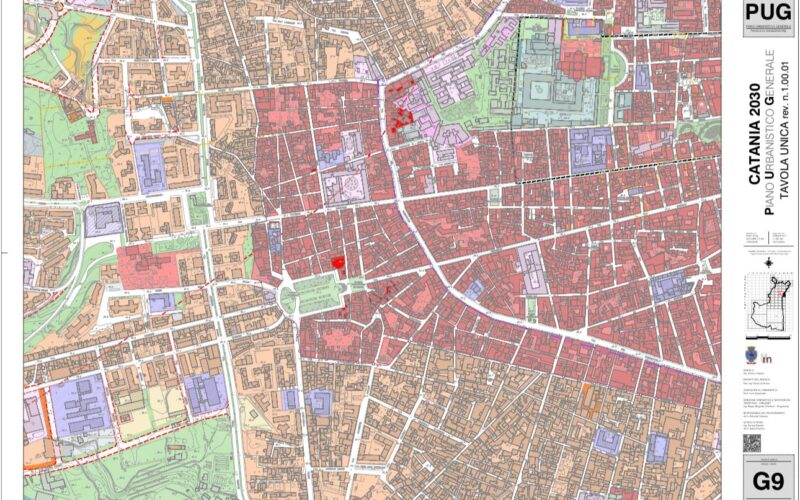
The Municipality has published the new Pug documents on its noticeboard, including the 54 maps at 1:2,000 scale. Specifically, the act adopted by the municipal executive is the Preliminary Design Document (DPP), whose contents will begin to have the first effects on land governance while awaiting the crucial step in the Municipal council, which will examine and give final approval.
The guidelines for the Catania of the future: zero soil consumption and green spaces
The mayor Trantino outlined the guidelines that will characterise the future Catania, designed neighbourhood by neighbourhood and area by area:
- Zero soil consumption: A decisive halt to uncontrolled building expansion in favour of urban regeneration and recovery of existing structures.
- Building safety and environmental protection: Targeted interventions to make the building stock resilient and safeguard the ecology.
- Climate change mitigation and urban green spaces: More green areas to counter the effects of climate change within the city.
- Sustainable mobility: Transport infrastructure and services rethought with people and citizens in mind.
“A wonderful journey towards the rebirth of a modern, innovative, young, safe city in step with the epochal changes of these years,” the mayor concluded, launching the phase of analysis and institutional debate on the new planning document.