Translated automatically by AI from the Italian original.
Sánchez gains ground, but the PP-Vox alliance remains on course for a majority
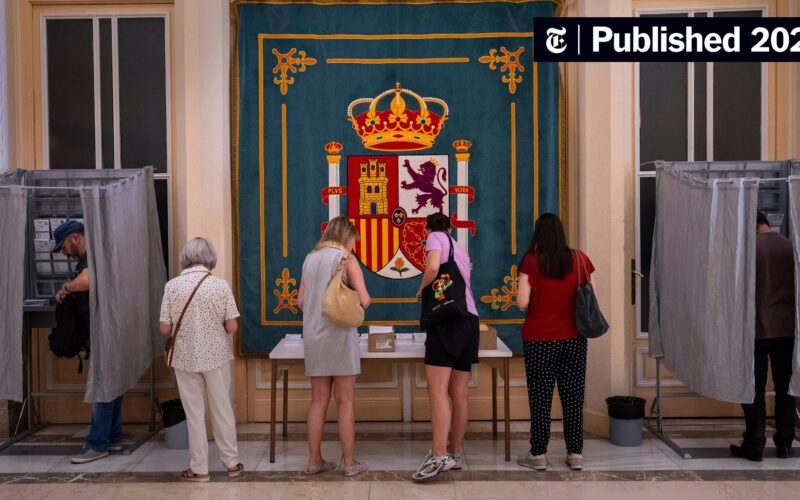
Spain is preparing for early general elections on Sunday, 29 November 2026, called after prime minister Pedro Sánchez dissolved the Cortes in early October following parliament’s rejection of housing decrees. With the publication of polls banned from 24 November, the eve-of-election picture shows a polarised landscape: the Socialist Party (PSOE) is gaining ground, but the combined strength of the People’s Party (PP) and Vox still gives the centre-right the numbers to govern. The main unknown remains voter turnout.
Eve-of-election figures: comparing the polls
Pre-election surveys reveal a marked gap between private institutes and the public barometer, while still confirming the solidity of the conservative alliance:
El País and Cadena SER
The last survey before the electoral blackout puts Alberto Núñez Feijóo’s PP at 31.8% (130–131 seats) and Sánchez’s PSOE at 30.9% (about 120 seats), with the gap now under one point. Crucially, Vox (Santiago Abascal) has surged to 17.3% (up from 12.4% in 2023), securing around 58 seats. Together, PP and Vox would comfortably exceed the absolute majority of 176 seats out of 350 (reaching between 187 and 191).
Private institute averages (elDiario and El Español)
These place the PP in slight decline at around 31%, the PSOE rising between 27.8% and 28.7%, and Vox between 17.5% and 18.7%. To the left of the socialists, Frente Amplio — the party led by Ada Colau that inherits Sumar’s legacy — hovers between 5.7% and 7%, while Podemos risks being shut out of parliament, polling between 1.7% and 2.7%.
The public CIS barometer
As often happens, the public institute diverges sharply from private estimates, giving the PSOE 34.4% and a lead of about 10 points over the PP.
The Spanish paradox: why the economy is not enough for Sánchez
Despite Spain boasting some of the Eurozone’s best macroeconomic indicators — with above-average GDP growth, rising employment and falling public debt — the government is heading into the election at a disadvantage. This disconnect between economic data and public support stems from several factors:
Cost of living and purchasing power
GDP growth has been driven by immigration, tourism and funds from Italy’s EU-funded recovery plan (PNRR), but per capita GDP and productivity have lagged far behind. For many households, wage increases have been eroded by inflation.
Housing crisis
The prohibitive cost of rent and mortgages has become the country’s top social emergency. It was the vote against the anti-housing crisis decrees by former Catalan allies Junts that brought down the executive.
Investigations and wear and tear
After eight years at the Moncloa, Sánchez’s image has been tarnished by corruption investigations that have touched the party and his inner circle, including his wife Begoña Gómez.
Immigration and infrastructure
Summer migration tensions in Ceuta have boosted support for Vox. This has been compounded by serious rail accidents in recent months, reigniting debates over the maintenance of public services.
The arithmetic of coalitions
On an individual level, Sánchez remains the most popular leader and the PSOE is holding its own against the PP. However, while the right is capitalising on Vox’s momentum, the progressive and independence camp appears fragmented and in retreat compared to 2023.
What is at stake: mobilisation and European balances
The election campaign has also been marked by internal tensions within the socialist camp — such as former prime minister Felipe González’s announcement that he will cast a blank ballot — and by the housing emergency, which both Feijóo and Ada Colau have claimed as a priority.
For the left, the main weapon to overturn the forecasts is mobilisation against the prospect of far-right ministers in the next government. According to El País, about three in four voters say they are certain to vote (five points higher than in 2023): abstention will therefore be the deciding factor. In the background lies the geopolitical weight of the vote, which could redraw the political balance of the entire European Union.