Translated automatically by AI from the Italian original.
Diplomatic tensions between Rome and Kyiv have eased after the Ukrainian attack that sank the Russian corvette Merkury in the Libyan port of Benghazi.
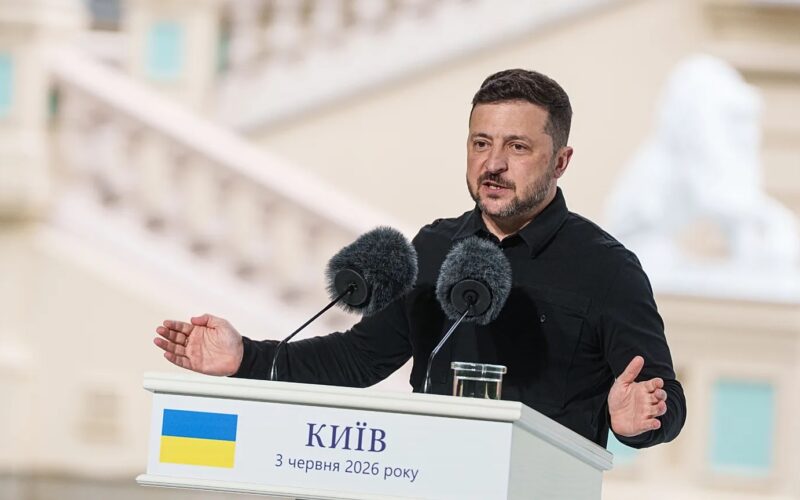
After days of controversy and conflicting accounts, President Volodymyr Zelensky reversed course, admitting that European allies — including Italy — had not been given prior notice of the operation.
The retraction from Kyiv and the call with Palazzo Chigi
The crisis began after an interview Zelensky gave to the BBC, in which the Ukrainian leader implied that such raids do not occur without some coordination with international partners. This version was immediately and firmly rejected by the Italian government: Defence Minister Guido Crosetto branded the remarks as “false”, while Deputy Prime Minister and Foreign Minister Antonio Tajani denied any prior warning.
Late yesterday afternoon, Prime Minister Giorgia Meloni called Zelensky to express Rome’s strong irritation and concern. After the conversation — in which the Ukrainian president reportedly apologised — Zelensky himself posted an official retraction on X, confirming the absence of prior coordination with European partners and pledging to ensure maximum information sharing in the future.
The hard line from the Farnesina and the domestic political front
Despite the diplomatic thaw, Italy’s position remains firm. In an interview with Quotidiano Nazionale, Tajani reiterated that, even if informed in advance, Rome would have opposed the raid. According to the head of the Farnesina, violating the sovereignty of Libyan territorial waters is a serious mistake that risks destabilising the western Mediterranean and endangering national interests. “In Libya we have military personnel, a navy ship, the financial police (Guardia di Finanza) and terminals that bring energy to Italy,” the minister recalled, while confirming overall support for Kyiv.
On the domestic front, the episode has fuelled political debate:
National security:
Transport Minister Matteo Salvini has called a meeting of the Maritime Security Committee for Tuesday.
Opposition:
Five Star Movement leader Giuseppe Conte attacked the executive, demanding that Prime Minister Meloni report urgently to Parliament.
Other fronts: tensions with the US and battlefield attacks
In the same BBC interview, Zelensky also highlighted tensions with Washington, criticising delays in the delivery of Patriot air defence systems — which he attributed to excessive US focus on the Middle East — and calling it “strange” that Donald Trump had posted a photo with Vladimir Putin, calling him “my friend”.
On the ground, the escalation continues:
Cross attacks:
Moscow claims to have shot down 1,246 Ukrainian drones in a single night and has extended its ban on kerosene exports until 31 March. Kyiv, meanwhile, has claimed a raid on a synthetic rubber factory in Russia’s Tula region, which is strategic for Iskander missiles.
Casualties and infrastructure:
Russian bombings have hit energy and civilian facilities in nine Ukrainian regions, causing at least five deaths and 14 injuries in Chernihiv, Kharkiv and Dnipropetrovsk.
Alarm in Europe:
Latvia has reported a drone incursion into its airspace, while a report by the International Institute for Strategic Studies notes a 16% rise in acts of sabotage linked to Moscow in Europe over the past year. In the background, there have also been judicial developments: in Ukraine, three officials have gone on trial for alleged torture at a recruitment centre in Chernivtsi, while Croatia has refused to extradite a suspect in the Nord Stream pipeline sabotage.