Translated automatically by AI from the Italian original.
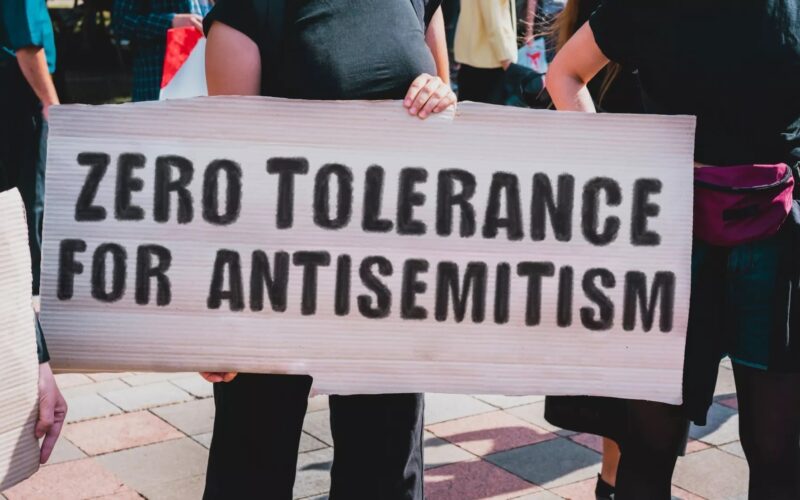
The vote on this bill should have been a foregone conclusion in a western country, yet it has instead led on the one hand to figures such as Emanuele Fiano no longer recognising themselves in the words of the PD secretary, and on the other to Vannacci insisting that “…we cannot accept the principle that offending a Jew is more serious than offending a Christian, a Muslim or a Buddhist…”
What do Italian Jews think, and what does the IHRA declaration say?
Anti‑Semitism bill passes in the Chamber: Emanuele Fiano leaves the PD
Emanuele Fiano, a long‑standing Democratic Party leader, announced live on Telelombardia that he was leaving the party after the PD decided to vote against the anti‑Semitism bill, which the Chamber has now approved definitively.
Visibly moved, Fiano explained that he had learned of the party’s position while visiting the Birkenau extermination camp. The secretary, Elly Schlein, had phoned him before the vote to try to make him change his mind, but Fiano described the line taken by the PD as an “insurmountable limit” and confirmed his irreversible choice despite the cordial discussion he had had with the leader.
The vote in the Chamber and the political divisions
The bill’s final approval came after a tortuous process and a particularly heated debate in the Chamber, during which the acting vice‑president, Giorgio Mulè, repeatedly had to call the House to order because of tensions linked to the conflict in Gaza.
- The opposition: the PD, the Five Star Movement and Green and Left Alliance voted against (after the PD had abstained in the Senate). The three centre‑left forces, which had requested amendments in the light of the unanimous appeal by life senator Liliana Segre, argued that by adopting the IHRA definition of anti‑Semitism the text risked curtailing legitimate political criticism of the Israeli government; they also accused the majority of exploiting the law for political ends. There were defections within the PD itself: five reformist figures (Guerini, Quartapelle, Fassino, Merola and Carè) chose to abstain. The bill was also opposed by deputies close to Roberto Vannacci, who claimed it would introduce a “thought crime”.
- The majority and the centre: the centre‑right and the government voted solidly in favour, joined by Italia Viva and Azione. The majority rejected the accusations of limiting free speech, stressing that the bill does not create new offences. The deputy minister Matilde Siracusano described the opposition’s vote against as a “missed opportunity”, lamenting that the debate had strayed from the bill’s actual purpose.
Meeting and perceptions of anti‑Semitism
We met some authentic “Romani de Roma” from the world’s oldest Jewish community.
“If in the past anti‑Semitism seemed confined mainly to the extreme fringes, it is worrying today to see it re‑emerge in areas that present themselves as democratic or that place themselves towards the centre of the national political spectrum.
In our view, a significant part of the political area described as the “left” displays strongly anti‑Semitic attitudes: it often leaves no room for any balanced analysis of the Israeli‑Palestinian conflict, nor for the role of the Hamas armed forces—whose disarmament was envisaged in the earliest agreements—ending up turning every occasion into an indiscriminate condemnation of Israel and world Jewry, as if they were the source of all evil.
A political phase lacking ideals
These are age‑old patterns, fed by ignorance and superficiality, that end up lending legitimacy to a deep‑rooted anti‑Semitism without any real attention to what it means to live the faith and the identity of the Jewish People. In a historical period poor in ideals, debate often degenerates into confrontation and personal attacks—as happens when the exchange is reduced to labelling Netanyahu a “fascist”—rather than to building concrete proposals for the country.
Historical memory and present choices
This climate has led many Jews to fear even a return to the spirit of the 1938 laws if the centre‑left were to win the next election.
In 1976 Indro Montanelli urged voters to back the Christian Democrats “holding their noses” to prevent the PCI from overtaking them; at the time many Jews in Italy voted communist, socialist and above all republican or social democrat, while others feared the shadow of Soviet expansion. Today the priority is to stand by those who show genuine closeness, in the knowledge that in politics nothing is ever set in stone.
Faced with slogans such as “from the river to the sea”, the question is unavoidable: what stance should one take? The centre of gravity seems to have shifted abruptly towards positions that wink at terrorism and at circles close to the Red Brigades. To those who accuse us of being fascists, we reply that we never have been, but we will never be “Nazi‑communists” either.
An appalling joke from the 1970s went: Racism is like the Jews: they must disappear.”
The IHRA definition of anti‑Semitism
The text also invokes the working definition of anti‑Semitism adopted by the Plenary of the International Holocaust Remembrance Alliance (IHRA) in Budapest in 2015, in line with the Stockholm Declaration: anti‑Semitism is understood as a certain perception of Jews that may be expressed as hatred towards Jews, through verbal or physical expressions, visual displays or actions directed at Jews or non‑Jews, property, community institutions or places of worship.
While making clear that criticism of Israel similar to that levelled at any other state is not in itself anti‑Semitic, the document notes that anti‑Semitism can target Israel as a Jewish collective, resort to conspiracy theories or attribute to Jews collective responsibility for general difficulties or for the choices of the Israeli state. Contemporary examples cited include:
- inciting, supporting or justifying violence or harm against Jews for ideological or extremist reasons;
- spreading false, dehumanising, demonising or stereotypical accusations, such as the myth of a global conspiracy or of control over the media, the economy and institutions;
- blaming the entire Jewish people for the actions of individuals, groups or even non‑Jews;
- denying, minimising or falsely accusing Jews of inventing or exaggerating the Holocaust and the genocide carried out by Nazi Germany and its collaborators;
- claiming that Jewish citizens are more loyal to Israel or to supposed global Jewish priorities than to their own country;
- denying the Jewish people the right to self‑determination, for example by defining the existence of Israel as a form of racism;
- applying double standards by demanding of Israel behaviour not required of other democracies;
- using images or themes from classical anti‑Semitism (such as deicide or blood libel) to describe Israel or Israelis, or comparing current Israeli policy to that of the Nazis;
- holding Jews collectively responsible for the actions of the state of Israel.
Finally, anti‑Semitic behaviour constitutes an offence when provided for by national law—as is the case in several countries for Holocaust denial or the dissemination of anti‑Semitic material—and assaults or damage against persons, buildings, schools, places of worship or cemeteries take on aggravated or specific relevance when the target is chosen on the basis of actual or perceived Jewish identity.
Discrimination in access to services or opportunities is also unlawful in many legal systems.