Translated automatically by AI from the Italian original.
A crucial day in international diplomacy today, Thursday 19 November 2026.
On the sidelines of the 33rd APEC summit in Shenzhen, the leaders of the three main nuclear superpowers — Donald Trump, Xi Jinping and Vladimir Putin — met for the first three-way summit in history.
The three-way meeting at Kylin Villa
After the morning’s bilateral meetings, Vladimir Putin arrived at the Kylin Villa state residence to officially begin the trilateral summit with Trump and Xi. According to Kremlin sources, the meeting is expected to last about an hour.
The morning’s preparatory talks
The Trump–Putin bilateral
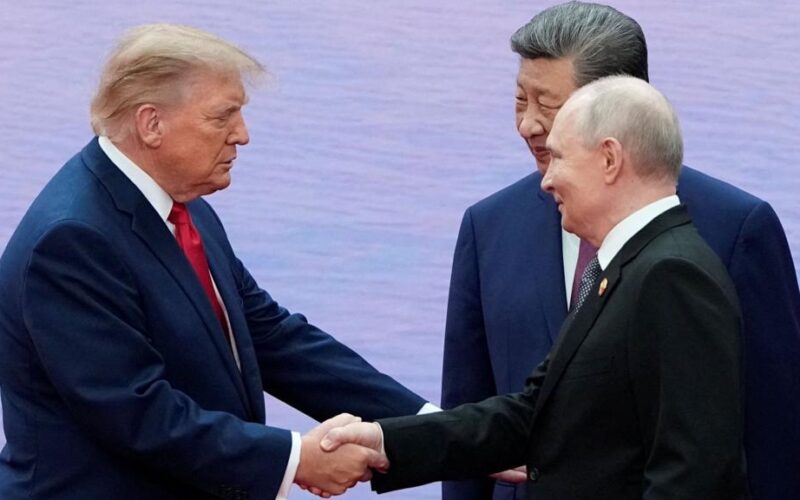
Described by the White House as a pull-aside (an informal meeting on the margins), the encounter lasted about 40 minutes and began with a cordial greeting in English. Kremlin adviser Yuri Ushakov reported that the dialogue focused on preparations for the trilateral, bilateral relations and resolving the conflict in Ukraine, adding that the Russian president left the room in “excellent spirits”.
The Trump–Xi bilateral
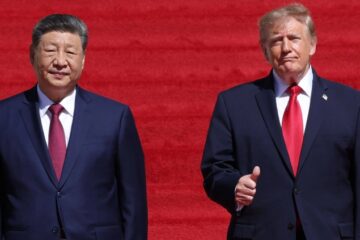
The American president described his Chinese counterpart as a “friend”, predicting stronger ties between Washington and Beijing thanks also to tariff agreements and the Board of Trade set up in May to rebalance trade. On the geopolitical front, both leaders reaffirmed their shared commitment to preventing Iran from acquiring nuclear weapons and to safeguarding energy security in the Strait of Hormuz. On Ukraine, Trump again stressed the conflict’s dire toll, estimating about 25,000 deaths a month, mostly among military personnel.
Strategic issues on the table
Nuclear armaments
With the New START treaty between the United States and Russia expiring in February 2026, the White House aims to lay the groundwork for a new strategic deterrence agreement that, for the first time, would also involve China, which has so far been reluctant to join such negotiations.
Trade and artificial intelligence
In his speech to the APEC plenary, Xi Jinping issued a call against protectionism, citing Shenzhen’s transformation from a fishing village to a technology hub as an example of the “courage” needed to ensure stable relations with the United States. Competition and rules on artificial intelligence remain among the most complex dossiers.
The weight of protocol
Differences in protocol have drawn observers’ attention: while Xi personally welcomed Trump at the airport with a hug, for Putin — who arrived in Shenzhen a few hours earlier — Beijing sent Cai Qi, Xi’s chief of staff and a leading figure in China’s leadership, while still giving him a reception above standard diplomatic norms.
Between symbolism and real national interests
Despite the media impact of the photograph showing the three leaders side by side, many analysts urge caution and avoid comparisons with the 1945 Yalta Conference. The three protagonists’ goals remain distant and tied above all to their respective domestic needs:
Xi Jinping aims to consolidate China’s image as a global mediating power ahead of the Party Congress in 2027.
Donald Trump seeks a major diplomatic achievement on the international stage to regain momentum after his party’s setback in the midterm elections.
Vladimir Putin sits at the table after more than four years of war in Ukraine, primarily aiming to break Western diplomatic isolation.