Translated automatically by AI from the Italian original.
The Middle East crisis has entered a new phase of high military tension, while on the diplomatic front negotiations remain poised between ultimatums and cross-conditions.
Military clashes and arsenals
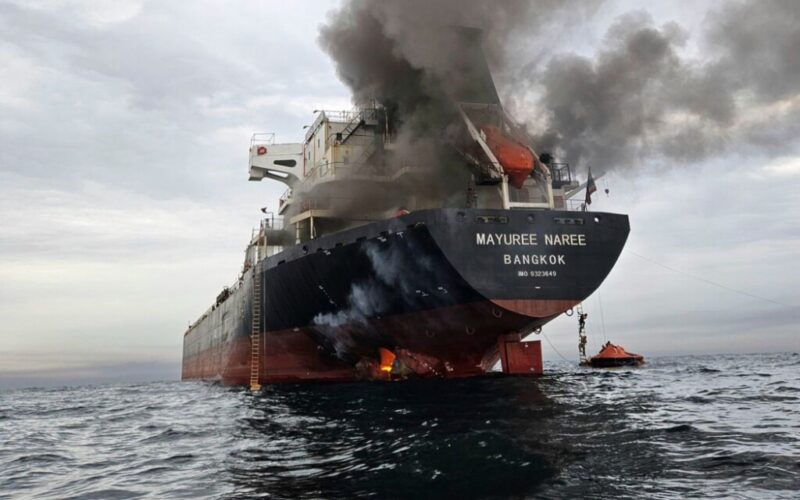
Iran claims to have sunk six oil tankers in the Strait of Hormuz, while the United States is said to have sent a third aircraft carrier to the area. According to the Wall Street Journal, Tehran still has an arsenal of between 1,500 and 2,500 missiles. On the Yemeni front, meanwhile, Houthi militants have advanced to within about 60 kilometres of Aden, the seat of government.
Raids in Bahrain
At dawn on Sunday, alarm sirens sounded in Bahrain. The Revolutionary Guards (Pasdaran) claimed to have launched six drones against a US air defence radar at the Riffa base, in response to alleged hostile actions by Washington. The army in Manama says it intercepted all the aircraft, denouncing a systematically hostile attitude from Tehran. The incident came 48 hours after a similar attack claimed on Friday against a US early warning system, though this was denied by the US Central Command. Bahrain, which hosts the US Navy’s Fifth Fleet, has called for the full implementation of UN resolution 2817 against Iranian raids.
The Hormuz blockade
The Pasdaran have reiterated the closure of the Strait of Hormuz, declaring that US attempts to escort commercial vessels have failed. On Saturday, two more oil tankers struck naval mines after disabling their transponders and following unauthorised routes, while two other ships reversed course. Tehran claims exclusive control of the strait together with Oman, a position firmly rejected by the United States.
The diplomatic game
On the negotiating front, there is little movement. Iran’s chief negotiator, Mohammad Bagher Ghalibaf, has announced that he delivered a package of seven conditions for a ceasefire to Qatar: lifting sanctions, ending the naval blockade, unfreezing funds, halting hostilities on all fronts and a formal declaration of the end of the war. According to Reuters, Donald Trump would be willing to suspend new raids if Tehran and the Houthis stop their provocations, though he intends to maintain the blockade on Iranian ports.
Araghchi’s proposal
From Islamabad, on the sidelines of a summit of the Economic Cooperation Organisation (with representatives from Pakistan, Turkey, Azerbaijan and Central Asian republics; Afghanistan was absent), Iranian foreign minister Abbas Araghchi announced that ten nations support the so-called “two-day plan”. Tehran says it is ready to reopen the Strait of Hormuz within 48 hours—reducing its earlier one-week estimate—provided Washington meets its economic and military demands, thus paving the way for a definitive truce.