Translated automatically by AI from the Italian original.
“No to ICC abuses, reform the UN and reduce nuclear risk”
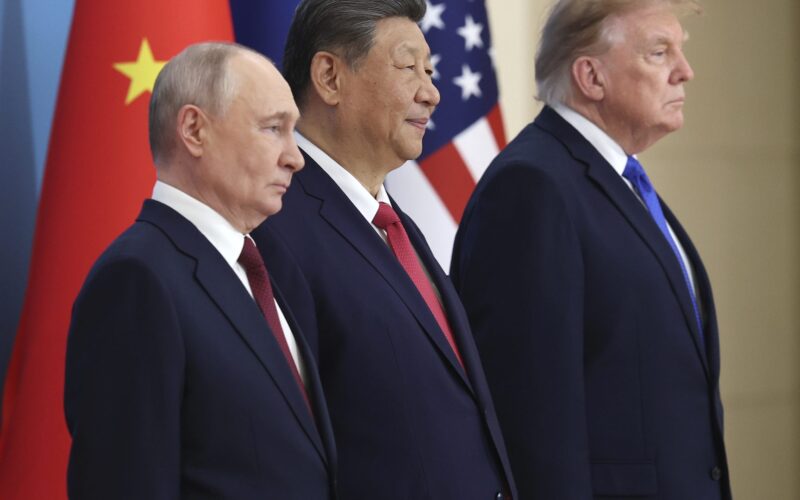
The first trilateral summit between Chinese leader Xi Jinping, US president Donald Trump and Russian president Vladimir Putin ended with a “declaration for peace”.
In the joint document, the three heads of state pledged to promote reform of the United Nations to tackle global challenges more effectively, to increase energy supply and to prevent nuclear proliferation, reiterating that a nuclear war cannot be won and must never be fought.
The immunity row and Brussels’ response
The passage most likely to cause tension concerns international justice: the three leaders called for respect of the immunity of state officials, urging the International Criminal Court (ICC) and similar bodies “not to abuse” their jurisdiction.
The European Commission responded immediately; through spokesperson Christian Wigand, Brussels reaffirmed its commitment to the rules-based international order, of which the ICC is a fundamental pillar.
However, the final statement made no mention of the conflicts in Ukraine and Iran, despite Trump saying he had addressed both issues earlier in the day.
The summit atmosphere and Xi Jinping’s position
The mood among the three leaders appeared relaxed, marked by cordial gestures, handshakes and a hug between Xi and Trump.
According to the state news agency Xinhua, the Chinese leader described the summit as “positive, constructive and fruitful”, stressing the importance of direct dialogue and urging a move beyond the “Cold War mentality” and the so-called “Thucydides trap”.
Xi also urged the major powers to establish crisis prevention mechanisms, avoid economic decoupling and work towards a world free of nuclear weapons.
On the media front, a diplomatic incident occurred when journalist Annmarie Hordern was excluded at the insistence of the Chinese delegation, despite pressure from the White House, according to an anonymous US official.
Putin’s broadside against the European Union
At the end of the negotiations, Vladimir Putin held a one-hour press conference marked by harsh tones towards Europe. The Kremlin leader accused the EU of having turned into a “political-military bloc” that poses a challenge to Moscow, calling any military cooperation between Brussels and Kyiv “a problem” and threatening “painful retaliation” for Ukrainian attacks on the Crimea bridge.
According to Putin, full normalisation of relations with some European countries will require a change in the current political elites. The Russian president also criticised the Western idea of a “liberal order”, calling it an attempt to monopolise power, while praising Trump’s approach, recognising his sincere commitment to finding solutions to conflicts and a closeness of views on various values.
Although he clarified that no regular schedule had been agreed for future three-way summits, Putin recalled the shared responsibility of Russia, China and the United States, as victorious powers of the Second World War and founders of the UN, to guarantee global security.